

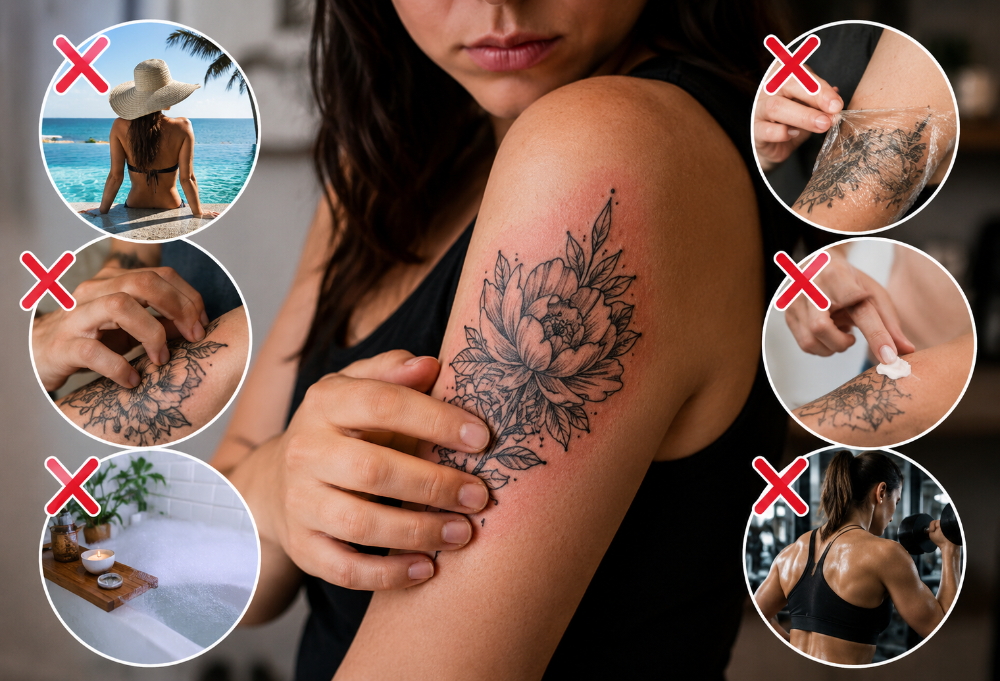
You finally did it. You sat in the chair, endured the needle, and walked out with a stunning piece of art on your skin. But here is the thing most people do not realize: the tattoo process does not end when you leave the studio. What you do in the days and weeks that follow will determine whether your tattoo heals beautifully or turns into a faded, patchy regret. Understanding what not to do after getting a tattoo is just as important as choosing the right artist or design.
Tattoo aftercare mistakes are incredibly common, and they happen to first-timers and seasoned collectors alike. The skin has just gone through significant trauma, and it needs time, attention, and the right environment to heal properly. Before you make a move, read through these critical warnings that every new tattoo owner needs to know.
Do Not Skip the Aftercare Instructions Your Artist Gave You
This sounds obvious, but it is one of the most frequent tattoo aftercare mistakes people make. Your tattoo artist gave you specific instructions for a reason. They know the ink they used, the depth of the work, and what your skin needs to recover. Ignoring those instructions, even partially, can lead to infection, ink fallout, and uneven healing.
One of the biggest errors in this category is removing the initial bandage too early or too late. Most artists now use second-skin or saniderm wrap, which should stay on for a specific window of time, typically between 24 and 72 hours depending on the artist’s recommendation. Peeling it off too soon exposes the raw wound to bacteria before a protective layer has formed. Leaving it on too long can trap moisture and create a breeding ground for bacteria underneath.
Another common slip in this phase is using the wrong ointment. Heavy petroleum-based products like Vaseline can suffocate the skin and pull color out of a fresh tattoo. Your artist likely recommended a fragrance-free lotion or a specialized tattoo aftercare balm. Stick with that recommendation and avoid experimenting with products you have lying around the house.
Do Not Expose Your Tattoo to the Sun or Tanning Beds
UV exposure is one of the fastest ways to destroy a fresh tattoo, and it remains a long-term threat even after the tattoo is fully healed. Direct sunlight on a new tattoo can cause serious damage, including blistering, fading, and distortion of fine lines and colors.
During the healing process, which typically takes two to four weeks for the surface layer and up to three months for deeper layers, you should keep your tattoo completely out of the sun. This means wearing loose, breathable clothing that covers the area whenever you go outside. Do not apply sunscreen to a fresh tattoo either. While sunscreen is essential for protecting healed tattoos long-term, putting it on a new tattoo can irritate the open skin and interfere with the healing process.
Tanning beds are just as harmful, if not worse, because they concentrate UV rays in a way that can rapidly break down the pigment in your ink. If you are someone who tans regularly, you will need to pause that habit until your tattoo is fully healed and even then, always apply a high-SPF sunscreen over the area before any UV exposure.
Do Not Soak Your Tattoo in Water
Swimming, long baths, and hot tubs are all on the list of what not to do after getting a tattoo. Submerging a fresh tattoo in water is a serious aftercare mistake that can lead to infection and ink loss.
Pools are treated with chlorine and other chemicals that are extremely harsh on healing skin. Even a brief dip can introduce irritants and bacteria into the open wound, leading to inflammation or worse. Natural bodies of water like lakes, rivers, and the ocean carry bacteria and microorganisms that pose a real infection risk to any open wound, including a fresh tattoo.
Hot tubs are particularly problematic. The combination of heat, chemicals, and the presence of other people makes them one of the riskiest environments for a healing tattoo. The heat alone can open the pores and draw ink out, leading to patchy or faded results.
Even at home, you need to be cautious. Long showers with hot water can soften the skin and loosen ink that has not yet settled. Quick, lukewarm showers are fine, but soaking in a bathtub should be avoided for at least two to three weeks. When washing the tattoo, use your hand with a gentle, unscented soap rather than a washcloth or loofah, which can be too abrasive on tender skin.
Do Not Pick, Scratch, or Peel the Healing Skin
This is one of the hardest tattoo aftercare rules to follow, because healing tattoos itch. As the skin regenerates, it will peel and flake in a way that can feel irresistible to pick at. Resisting that urge is absolutely critical.
When you scratch or pick at a healing tattoo, you are physically removing ink along with the dead skin. This leads to patchy spots, uneven color, and sometimes permanent scarring. Even if it looks like a small flake of skin is barely hanging on, leave it alone. It will fall off naturally when it is ready, and the ink beneath it will be intact.
If the itching becomes unbearable, gently pat the area with a clean hand rather than scratching. Applying a thin layer of fragrance-free moisturizer can also help relieve the sensation. Keeping the skin hydrated during the peeling phase is one of the best things you can do to support even healing.
Tight clothing that rubs against the tattoo can cause similar damage by essentially picking at the skin repeatedly throughout the day. Choose loose, soft fabrics that will not cling to or irritate the area, and avoid any clothing with rough seams or textures over the tattoo site.
Do Not Neglect the Signs of Infection or Allergic Reaction
Knowing what not to do after getting a tattoo also means knowing when something has gone wrong. Some redness and swelling in the first day or two is completely normal, as the skin is responding to trauma. But there are warning signs that go beyond normal healing, and ignoring them is one of the most dangerous tattoo aftercare mistakes you can make.
Signs of infection include excessive redness that spreads beyond the tattoo, warmth or fever in the area, swelling that worsens after the first 48 hours, pus or unusual discharge, and a foul smell coming from the site. If you experience any of these symptoms, do not wait it out. See a healthcare professional as soon as possible.
Allergic reactions are less common but do occur, particularly with certain ink colors like red, yellow, and green, which sometimes contain compounds that sensitive individuals react to. An allergic reaction may present as raised, itchy bumps or hives around the tattooed area. This also warrants a visit to a doctor rather than a self-diagnosed home remedy.
Do not attempt to treat a suspected infection with over-the-counter antibiotic creams without medical guidance, as some of these products can interfere with ink and cause further irritation.
Conclusion
Caring for a new tattoo requires patience and discipline. Understanding what not to do after getting a tattoo can be the difference between vibrant, lasting artwork and a costly touch-up appointment. Avoid common tattoo aftercare mistakes like sun exposure, soaking, picking at the skin, and ignoring your artist’s instructions, and your tattoo will heal into exactly the piece you envisioned.
Need Custom Tattoos & Piercings Near You?
At Skin Illustrations Tattoo Studio, we’re more than just a tattoo parlor—we’re a creative sanctuary where your ideas, stories, and identity come to life through ink. By offering custom tattoos, an attentive tattoo design process, and a team of passionate tattoo artists, we are proud to deliver exceptional artistry tailored to you. Whether you’re considering floral tattoos, handwriting tattoos, black and gray tattoos, or bold full-color tattoos, reach out to us today and let us help you design something meaningful, lasting, and entirely your own.